
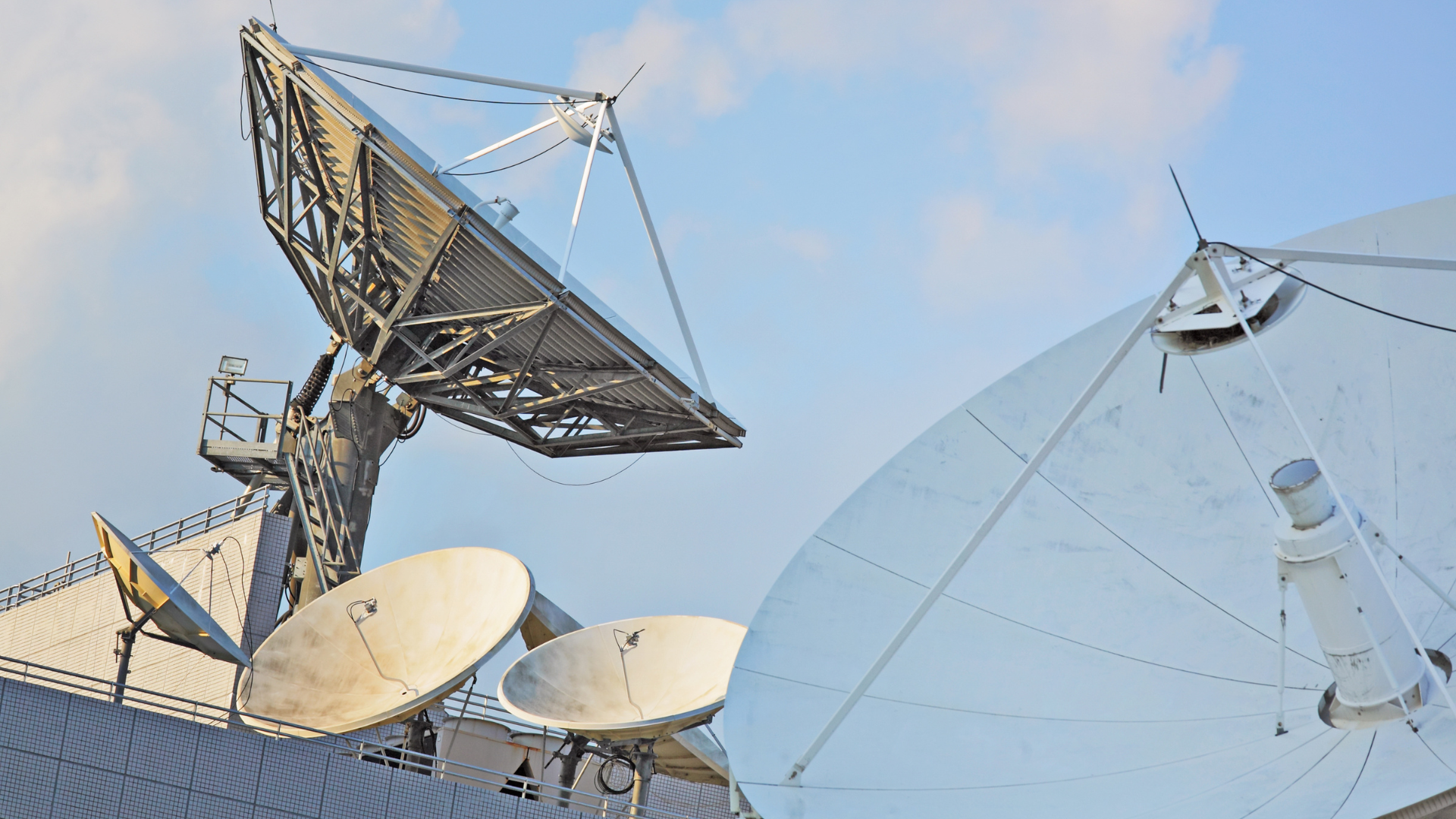
Why is cislunar infrastructure becoming the defining factor of global competitiveness in space? What shifts when space activity moves from isolated missions to continuous operations? And how do communications, navigation, and data systems determine who participates meaningfully in the emerging space economy? The strategic importance of cislunar infrastructure lies in shifting episodic missions to permanent systems.
This article examines how cislunar space is evolving into a distinct operational and economic domain where infrastructure, not exploration, defines long-term relevance. It explores how communications architecture, navigation systems, and data infrastructure form the backbone of sustained activity, enabling continuity, scalability, and interoperability across multinational environments. As missions become repeatable, infrastructure becomes the layer that determines access, resilience, and influence.
The piece then outlines how nations, particularly emerging economies, can participate without sovereign launch capability by contributing to communications systems, navigation frameworks, data operations, and governance structures. As cislunar infrastructure matures, competitiveness shifts from symbolic milestones to operational capability, where those who build and integrate systems become central to the future of the space economy.
For many years, space exploration was defined by destinations. The Moon. Mars. Low Earth orbit. But Space Science has evolved beyond destinations. Today, the defining factor of global competitiveness is infrastructure.
The region between Earth and the Moon, known as cislunar space, is becoming an operational environment in its own right. It’s not simply a transit corridor. It’s a strategic and economic zone where communications, navigation, logistics, and data systems must function reliably and continuously.
From my experience in satellite systems and telecommunications architecture, I’ve learned that infrastructure determines who participates meaningfully and who remains symbolic.
Communications, navigation, and data systems support the Moon and Mars architecture. Without them, exploration can’t scale. With them, operations become sustainable.
The strategic importance of cislunar space infrastructure lies in shifting episodic missions to permanent systems.
Defining the Cislunar Domain as an Operational Environment
The Earth–Moon system is no longer treated as an abstract scientific boundary. It’s emerging as a distinct operational and economic zone. In my discussions at international forums such as the International Astronautical Congress and various governance dialogues, I have increasingly heard cislunar space described not as a transit corridor, but as an operational environment that requires rules, resilience, and repeatability.
That shift in language signals something important: We are no longer planning occasional missions; we’re designing for continuity. Cislunar space includes orbital pathways, transfer trajectories, communication relay points, staging orbits, and surface interfaces that connect Earth-based infrastructure to lunar systems.
Historically, space activity focused on low Earth orbit or deep space exploration. Cislunar space sat in between, largely unused. But that’s changing. Programs such as Artemis are building permanent architecture that treats this domain as an environment requiring governance, continuity, and reliability.
The biggest misconception is that cislunar space is about exploration. It’s not, it’s about infrastructure.
Cislunar space is evolving into an operational and economic layer where communications, navigation, logistics, and data systems must function continuously. Once systems become permanent, the environment shifts from episodic missions to sustained architecture. Competitiveness will be determined not by who arrives first, but by who builds systems that enable services and scale economic participation.
This shift represents a structural change. Infrastructure now matters more than single missions. When activity becomes repeatable, investment becomes rational. And when systems operate
continuously, new economic layers form.
Cislunar space infrastructure is therefore not an extension of low Earth orbit or simply a stepping stone to Mars. It has its own strategic layer, with its own requirements and competitive implications.
Cislunar Space Infrastructure as the Enabling Layer of Space Power
Infrastructure determines access, resilience, and continuity. In terrestrial terms, nations don’t compete over individual flights; they compete over air traffic systems, shipping lanes, digital fiber networks, and power grids. The same logic now applies to cislunar space infrastructure.
A symbolic presence, a single landing or mission, doesn’t equate to operational control. Operational control depends on networks, communications relay satellites, navigation frameworks, orbital transfer corridors, and staging nodes.
Cislunar space introduces new strategic calculations. Transfer orbits, such as Near-Rectilinear Halo Orbits (NRHO), are becoming staging points. Transfer corridors between Earth orbit and lunar orbit are becoming logistical highways. These pathways are infrastructure in motion.
From a telecommunications perspective, infrastructure defines who provides services and who consumes them. In cislunar space, the same will be true. The providers of connectivity, navigation, and data management will shape the operational environment for all participants.
From my experience managing satellite and ground capabilities, I have seen how the “invisible layers” determine whether an initiative scales or stalls. Hardware may attract attention, but operations define power. When your ground segment is stable, your regulatory framework is clear, your data pipelines are secure, and partners treat you differently.
Angola’s experience reinforced that credibility is operational and institutional, not symbolic.
Through building space-ground infrastructure, mission control capability, operational systems, data integration pipelines, and Decision Support Systems, we’ve learned that asset ownership alone doesn’t create influence. Operational continuity, human capital development, regulatory clarity, and ecosystem activation define credibility.
Infrastructure that’s aligned with economic strategy and governance coherence determines long-term relevance.
This is where emerging economies must pay attention. Infrastructure influence doesn’t require sovereign launch capability. It requires systems engineering, standards alignment, and technical competence.
Communications Architecture as the Backbone of Cislunar Activity
Cislunar operations are fundamentally communications-limited. Continuous connectivity is not optional for crewed missions, robotic operations, or autonomous systems.
Relay satellites, cross-links, latency management, and spectrum coordination will define how effectively cislunar space functions. Interoperability standards will determine who can plug into the network.
Coming from a telecommunications and satellite systems background, I can say with confidence that communications architecture is never an afterthought; it’s the foundation. I have sat in technical reviews where a single bandwidth constraint reshaped mission planning entirely. When inaction increases or relay capacity is underestimated, everything else adjusts. The same reality will shape cislunar activity.
In cislunar space, communications systems must be designed around relay satellites positioned strategically in lunar orbit, cross-link networks between nodes, latency management protocols, spectrum coordination frameworks, and interoperable communication standards. These systems must function under multinational conditions where different space agencies and commercial operators exchange data seamlessly.
Interoperability becomes a strategic instrument. Technical standards are not neutral. They determine who integrates easily and who faces friction.
For emerging economies, this is a realistic entry point. Contributing to communication subsystems, network management software, ground segment operations, and spectrum coordination in cislunar space allows participation without owning launch vehicles.
Navigation and Timing Beyond Earth-Centric Systems
Terrestrial Global Navigation Satellite Systems (GNSS) were not designed for cislunar space because signal strength diminishes with distance, and geometry becomes less reliable. Lunar operations can’t depend solely on Earth-based navigation.
Reliable Positioning, Navigation, and Timing (PNT) systems are therefore essential for safety and logistics in cislunar space. Lunar orbiters, surface rovers, landers, and cargo transfers require precise trajectory and timing information.
Emerging approaches include dedicated lunar navigation satellites, cross-link timing synchronization, autonomous navigation algorithms, and optical navigation systems. Navigation isn’t just technical, it’s strategic. Whoever provides navigation services influences operational dependency.
In terrestrial contexts, GNSS providers hold significant geopolitical leverage. The same dynamic will emerge in cislunar space. For emerging economies, contributing to navigation software, signal modeling, validation testing, and standards frameworks in cislunar space offers meaningful participation pathways.
In national infrastructure development, I have seen how positioning systems quietly support entire sectors from aviation to agriculture. When navigation is unreliable, confidence drops. In cislunar space, navigation reliability will directly determine whether logistics chains remain viable. This isn’t a technical detail; it’s a strategic lever.
Data Infrastructure and the Control of Information Flows
Data is a strategic asset. In cislunar space, data flows will include telemetry, navigation updates, scientific payload information, environmental readings, and operational diagnostics.
Bandwidth constraints require prioritization. On-orbit processing reduces transmission loads. Secure data relay becomes essential to protect mission integrity.
Data infrastructure in cislunar space must support onboard processing, distributed storage, secure relay channels, cyber resilience, and shared situational awareness. From my experience managing satellite systems, I have repeatedly observed that data pipelines and ground systems often determine mission success more than the spacecraft itself.
Emerging economies can engage here. Data analytics, AI-based decision tools, ground segment operations, and cybersecurity systems are scalable entry points into cislunar space architecture. Participation in data infrastructure allows countries to contribute intelligence and operational insight, not just hardware.
In space systems, hardware creates potential; ground architecture creates value.
Improvements in ground coordination, data processing, and integration into decision frameworks often generate greater national impact than changes to spacecraft hardware. Earth observation capabilities, for example, only become strategic when embedded into structured Decision Support Systems and geodata platforms that influence real policy and economic decisions.
Cislunar infrastructure will follow this same logic, standards, data systems, and governance alignment will ultimately matter more than hardware alone.
Economic Participation Beyond Launch Capabilities
Space influence is often equated with launch capacity. That equation is outdated.
Cislunar space allows economic participation that’s decoupled from sovereign launch vehicles. Service provision, communications management, navigation modeling, data analytics, and ground network operations are valuable layers.
Emerging economies can contribute through ground segment integration, network operations centers, software-defined communication systems, data analytics platforms, and spectrum coordination expertise.
In Angola, we have seen how national satellite operations create local technical ecosystems. Skills developed in telecommunications, ground infrastructure, and data processing spill over into other industries.
Cislunar space multiplies these opportunities. Workforce development tied to communication architecture, navigation modeling, and systems engineering strengthens national competitiveness.
This isn’t speculative; it’s structural.
I often remind teams that credibility in space grows from operational competence. When partners see that you can manage data flows, maintain uptime, and coordinate across institutions, you become part of the backbone. That transition from observer to operator is where competitiveness begins.
Infrastructure Governance and Competitive Positioning
Technical standards become instruments of influence. In cislunar space, interoperability frameworks, access rules, and service provision models will shape participation.
Fragmented systems increase cost and reduce efficiency. Shared infrastructure reduces redundancy but requires governance coordination.
Balancing national interests with multinational architecture is complex. Governance mechanisms must address access rights, service pricing, data-sharing norms, security protocols, and conflict mitigation.
Inclusive governance strengthens resilience. Exclusion creates fragmentation.
From my engagements in international forums, I have consistently emphasized that global space governance must include emerging economies. Cislunar space cannot be sustainable if it reflects only a narrow set of capabilities.
Participation in governance discussions is therefore a strategic investment.
Good space governance creates structured predictability.
It requires clear access rules, interoperable standards, transparent service models, conflict-prevention mechanisms, and inclusion of emerging economies in rule formation.
In a multi-polar space economy, diplomacy is infrastructural. Participation in standards-setting and governance discussions today determines competitiveness tomorrow. Inclusive governance strengthens resilience; fragmentation increases cost and instability.
Cislunar Infrastructure as a Bridge to the Moon–Mars Continuum
Moon-focused infrastructure is foundational.
Communications relay systems, navigation frameworks, data processing standards, and logistics protocols developed for cislunar space are directly reusable for Mars missions.
The Moon acts as a proving ground. Systems validated in cislunar space reduce risk for deep-space expansion.
Early infrastructure alignment creates compounding advantages. When architectures are interoperable from the start, integration friction declines over time.
In this way, cislunar space becomes the bridge between near-Earth activity and deep-space ambition.
Mars readiness is not a leap; it’s an accumulation of reliable systems. Every stable communications node, every validated navigation protocol, every tested logistics model in cislunar space reduces uncertainty further outward. That’s why infrastructure alignment matters now.
Long-Term Competitiveness in a Multi-Polar Space Economy
We are entering a multi-polar space economy. Multiple actors, both public and private, are simultaneously shaping architecture.
Competitiveness will not be measured by flags planted, but it will be measured by services delivered.
Infrastructure maturity predicts sustained relevance. Nations that integrate early into cislunar space systems accumulate experience, familiarity with standards, and operational credibility.
Compounding effects matter. Each mission adds learning. Each subsystem integration increases technical depth. Each governance engagement strengthens positioning.
Cislunar space is where these compounding advantages are forming.
For emerging economies, the strategic path is clear. Invest in STEM pipelines aligned with communications and navigation systems; develop digital infrastructure capable of supporting space data; engage in standards and governance discussions early; and build subsystem competence that integrates into multinational architectures.
The future of space competitiveness lies not in isolated milestones but in sustained capability.
Cislunar space represents the operational layer where that capability is tested, refined, and scaled. This infrastructure is not theoretical. It’s becoming the structural backbone of the Moon–Mars continuum.
Communications networks, navigation systems, data architecture, logistics modeling, and governance frameworks are redefining how space power is exercised.
From my practical experience in satellite and telecommunications systems, nations that understand infrastructure and not just missions will shape the next era.
Emerging economies can benefit meaningfully. Launch capability is not the sole gateway.
Systems engineering, digital infrastructure, navigation modeling, communications management, and governance participation are equally powerful entry points.
Cislunar space is more than a geographic region. It’s the competitive arena where infrastructure maturity defines long-term relevance.
The question isn’t who reaches it first; it’s who builds it to last.