Why does space education matter for future generations beyond science and exploration? How does it shape the way young people think, learn, and prepare for a changing global economy? And what happens when education shifts from memorization to real-world problem-solving?
This article explores how space education acts as a gateway to curiosity, STEM skills, and systems thinking. By connecting disciplines like engineering, communications, and data science, it creates a more applied learning environment where students develop practical capabilities and understand how complex systems operate. As the global space economy expands, these skills become transferable across industries, positioning young people to participate meaningfully in future workforce demands.
The piece also highlights how space education drives empowerment, particularly in emerging economies. It enables young people to see themselves as creators of technology rather than consumers, building confidence, identity, and long-term competitiveness. As space becomes embedded in global infrastructure, investing in education becomes a direct investment in human capital and future economic participation.
The typical picture of space is rockets, satellites, and missions. But the deeper truth is that space has always been about people. Space science is not only about where humanity can travel. It’s about what humanity can become when imagination meets discipline and when long-term strategy meets execution.
That’s why the most important space conversation isn’t about launch vehicles or orbital mechanics, it’s education, what it does to the way young people think, learn, and see themselves in the world.
Space is a mirror. It reflects our values, ambition, curiosity, and ability to cooperate. It shows what we prioritize and what we are willing to build over decades. And when we talk about space, we are ultimately talking about human potential.
That is why space education and space science matter. It turns a distant topic into a personal one. It turns a global industry into a local opportunity. Turning curiosity into capability.
Framing Space as a Human Story
Space is often framed as a technical achievement. But technical achievement is only the surface.
Underneath every mission is a story of people who trained, failed, improved, and tried again. People who build systems, manage risk, and operate under constraints. People who learned how to coordinate across institutions, disciplines, and borders.
If we reduce space to hardware, we miss its real meaning. Space has always been one of humanity’s strongest symbols of possibility. It represents exploration, progress, and the belief that the future can be shaped through effort, knowledge, and cooperation.
That is why space education matters. It gives young people something bigger than their immediate environment, inviting them into questions that don’t have simple answers, and encourages them to think long-term.
I was about 15 years old when I discovered electronics and microcontrollers. What began as curiosity quickly became transformative. I realized that a small programmable device could control real systems. That connection between logic and the physical world changed my perspective.
As I moved into telecommunications, I began to understand how systems connect and communicate across long distances. Infrastructure does shape opportunity. From there, the transition to satellite systems and space architecture felt natural. If you want to connect continents reliably, you look upward.
That journey from microcontrollers to telecommunications to space systems shaped how I see technology. It’s not something to consume, but something to design and govern.
Through my engagements in international forums and university settings, I’ve seen what happens when younger people have the opportunity to think outside the box. Space captures attention in a way few other topics can. It sparks imagination, but it also demands rigor. That combination is rare.
Space, in its most meaningful form, is the human story of learning and transformation.
Space as a Gateway to Curiosity and Lifelong Learning
Space naturally triggers wonder. It makes people ask questions they might not ask otherwise.
This is why space education is such an effective entry point into learning. It invites students in through curiosity first, which is not a soft skill. It’s actually the foundation of problem-solving. I believe that a student who learns to ask better questions becomes a stronger learner in every subject.
Space also encourages big-picture thinking. Space missions require coordination, redundancy, testing, and long-term planning. Even at a simple level, a student building a small satellite model or learning how remote sensing works begins to understand complexity.
Space education also helps make science feel exciting and accessible. Many young people disengage from STEM because they don’t see how it connects to the real world. Space gives science a narrative. It gives technology a purpose. It makes mathematics feel like a tool and less like a punishment.
And when space becomes part of learning, students begin to imagine themselves as part of the future, not just observers of it.
Strengthening STEM Education Through Space
Space is one of the strongest tools we have for strengthening STEM education because it naturally integrates multiple disciplines. A single space mission requires physics, mathematics, engineering, software, materials science, communications, and data analysis.
That is why space education isn’t a niche topic. It’s a practical educational strategy.
When students learn STEM through space, they develop technical literacy in a more applied way. They learn how to test assumptions. They learn why measurement matters. They learn how errors compound, and they learn that systems must work together.
They also learn creativity. Space isn’t only about equations, but it’s also about design, tradeoffs, and making something work under constraints.
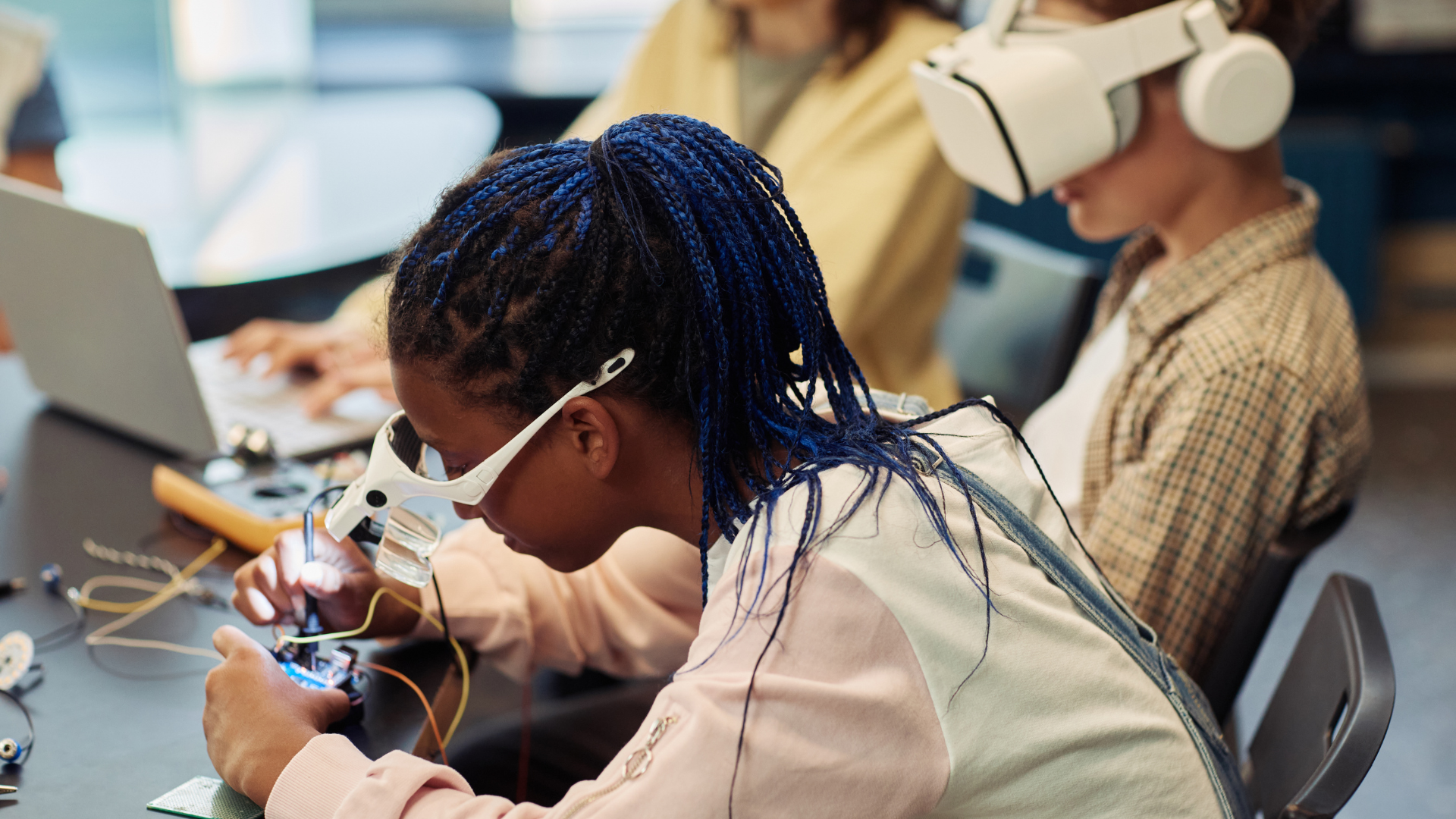
This is why hands-on learning matters. Space education is most effective when students build, simulate, code, and experiment. That’s how confidence grows and how theory becomes capability.
This is where many education systems need to evolve. We can’t teach young people only to memorize. We need to teach them to solve.
Space creates a learning environment where solving is the point. It rewards curiosity, precision, and persistence.
And when STEM education becomes more practical, it becomes more inclusive. Students who may not thrive in traditional academic environments often thrive when learning becomes applied and problem-based.
Space education unlocks that shift.
Preparing Young People for the Future Economy
The global economy is changing. Technology is reshaping labor markets, industries, and national competitiveness. Space is part of that shift.
The global space economy is growing, but what matters more is how space capabilities spill into other sectors. Satellite connectivity supports education, healthcare, business, and government services. Earth observation supports agriculture, climate monitoring, infrastructure planning, and disaster response.
This means the skills developed through space education are transferable. A student who learns remote sensing can work in environmental monitoring. A student who learns satellite communications can work in telecommunications. A student who learns systems engineering can work in transport, energy, or cybersecurity.
Space-related skills are not isolated. They are foundational skills for modern careers.
This is why space education should be treated as a workforce strategy. It builds the kind of talent economies need.
It also builds confidence. Young people begin to see themselves as capable of working in advanced fields. That matters because economic participation isn’t only about jobs. It’s about identity. It’s about belonging in the future, and space education helps young people believe that they belong.
The next phase of the space economy will require both technical depth and systems integration.
However, technical excellence remains foundational. Systems engineering, AI integration, cybersecurity, orbital mechanics, and data science are non-negotiable. Physics can’t be negotiated.
But as space becomes embedded in global infrastructure, the differentiator will be integration across complexity, technical, institutional, economic, and governance systems.
The future will reward those who can:
- Design resilient systems.
- Govern data responsibly.
- Align infrastructure with national strategy.
- Navigate international standards.
- Lead across institutions.
Space missions are engineered, and space ecosystems are orchestrated. Integration matters more than isolation.
Space Education as a Tool for Empowerment
One of the most important outcomes of space education is empowerment. It helps young people see themselves as creators, not just consumers of technology.
This is especially important in regions where technology is often imported rather than developed locally. When young people only consume technology, they remain dependent. When they learn to build technology, they gain agency.
Space education can expand representation in future-facing industries. It can bring more young Africans into engineering, data science, and space policy. It can also build leadership.
And leadership isn’t only about technical ability. It’s also about governance, standards, and participation.
My mission is to show young Africans that space is about building futures, jobs, and opportunities in the global economy.
I want to show them that it’s actually about building futures, jobs, and opportunities in the global economy. It’s a direct path to growth, sustainability, and fulfillment. Space inspires curiosity, preparing young people to see themselves as creators of solutions, not just consumers of technology.
Investing in space is investing in talent. And when we empower the next generation with skills, imagination, and purpose, we’re not just reaching for the stars, we’re building Africa’s future right here on planet Earth.
Empowerment begins in the classroom, but it must continue into institutions, training pipelines, and real-world opportunities.
Why Space Matters for Africa’s Next Generation
Space matters for Africa for practical reasons. Africa faces challenges that require advanced tools, such as climate variability, drought, food security pressures, infrastructure monitoring, coastal risk, and connectivity gaps.
Space systems provide scalable solutions. Satellites can reach rural regions. Earth observation can track land and water. Data services can support planning and resilience.
But Africa’s role in space must go beyond using space services. Africa must participate in building, governing, and improving them, which requires local talent.
Space education is how Africa builds that talent.
Africa also has a demographic advantage. The continent has one of the youngest populations globally. That youth curve isn’t only a statistic, it’s a strategic resource. But it becomes a resource only if education systems can convert potential into skill.
Space education is one of the strongest tools for doing that because it motivates students to learn hard subjects and apply them to real-world challenges.
Africa’s next generation deserves access to that kind of future. And Africa’s space ambitions must be grounded in people. Not only in hardware.
Investing in Space as an Investment in Talent
Many people talk about investing in satellites. That matters. But the deeper investment is in people.
Space education builds human capital, and human capital creates long-term competitiveness.
In my own work, I have seen how invisible systems often matter more than visible achievements.
If Africa wants to be competitive, it must build engineers and operators who understand systems. It must build data scientists who can process information locally. It must build policymakers who understand standards and governance.
Space education is how that pipeline begins.
It also strengthens resilience. A country with local expertise is less dependent. It can negotiate better partnerships. It can secure its data. It can sustain capability over time.
This is why I often describe STEM capacity as infrastructure. It’s a strategic requirement, not a social add-on.
And it’s also why mentorship matters.
One of the most important lessons I learned is not to expect the space sector to offer an easy path because if it does, something is probably wrong.
Designing a successful space mission can take years of disciplined planning and integration. Failure can happen in seconds, and that reality teaches humility quickly.
Early in my career, I chose the most complex tasks rather than the easiest ones. Complexity generates tacit knowledge and becomes your unique foundation, the kind of knowledge that can’t be copied.
In space, intelligence is essential, but resilience, humility, and grit sustain long development cycles. Endurance often outperforms brilliance, but long-term capacity, personal or national, is engineered through disciplined persistence.
Looking Toward the Future We’re Building
Space is about what kind of future we want on Earth.
Space teaches long-term thinking. It teaches systems. It teaches cooperation. It teaches humility. It shows how fragile Earth is and how interconnected human life is.
Space education carries those lessons into the next generation.
And it is not enough to teach students theory. They need exposure. They need role models. They need mentorship. They need to see how real programs work.
This is where I have seen the impact most clearly.
Space education isn’t only about learning facts but about joining a global ecosystem. It’s about building confidence and competence, turning imagination into contribution.
And for Africa’s next generation, that’s not optional. It’s essential.
Because the future space economy is being built now. The rules are being shaped now. The standards are being set now. The talent pipelines are being formed now.
If Africa wants to shape the future, Africa must invest in people now.
Space education is the most direct pathway to that future.
Success won’t be defined by hardware alone. It will be defined by institutional strength and depth of talent.
Over the next five years, success means:
- Strengthening national space ground infrastructure and mission control capability.
- Integrating Earth observation into structured Decision Support Systems.
- Expanding AI-enabled geodata platforms.
- Developing a skilled domestic workforce.
- Increasing private-sector participation in space value chains.
- Deepening regional and international cooperation.
True success will be when space is fully embedded as public infrastructure, supporting agriculture, connectivity, environmental resilience, and economic planning.
Most importantly, success will be measured by people. If more young Angolans see themselves as builders of space systems, then the program is achieving its purpose.