
Where can Africa create the most value in the global space industry by 2035? The African space industry has opportunities to create economic value through satellite connectivity, Earth observation, geospatial intelligence, climate resilience, cybersecurity, and specialized technical services. Rather than measuring progress solely by satellite launches or infrastructure ownership, African countries should focus on developing competitive businesses, skilled professionals, and practical applications that address national and regional needs.
Drawing on Angola’s experience with ANGOSAT-2, Conecta Angola, GEDAE, and the Angola Drought Decision Support System (ADDSS), the article highlights how commercial partnerships, workforce development, and regional cooperation can strengthen Africa’s position in the global space economy. By 2035, success should be measured by the services African companies deliver, the markets they serve, and the economic opportunities they create.
The next decade of space development will bring major changes to how countries communicate, manage resources, respond to environmental challenges, and build new businesses.
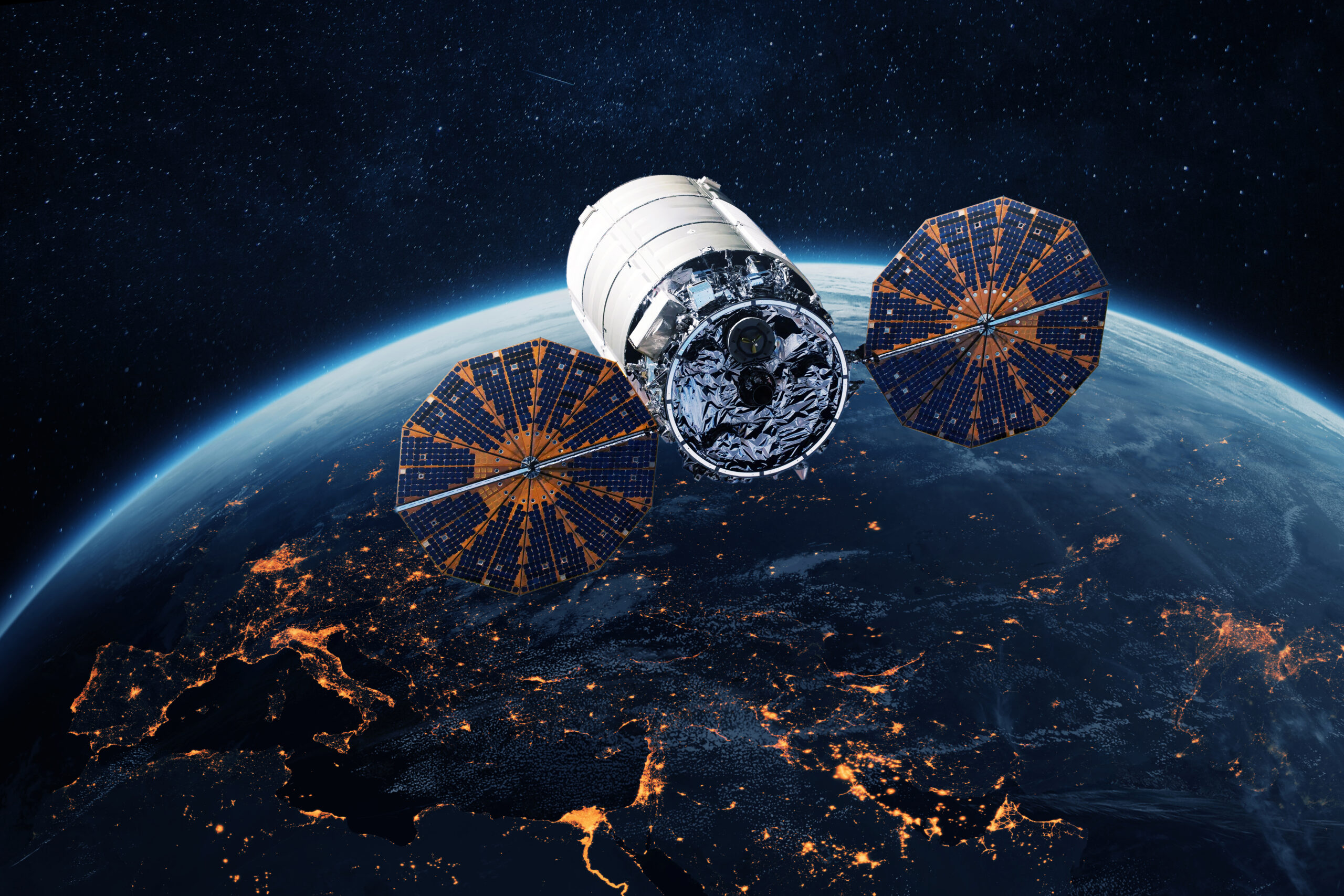
But progress shouldn’t be measured only by which countries launch the most satellites or develop the largest constellations.
Instead, where can countries create the most value from the technologies and capabilities becoming available?
Through my experience building Angola’s national space program and working with regional and international partners, I’ve seen how important this is. ANGOSAT-2 expanded our communications capacity. Conecta Angola brought satellite connectivity closer to communities and businesses.
Space science and technology provide the technical foundation for many of these capabilities, but countries also need the people, institutions, and businesses that can put them to work.
How Is the Global Space Industry Changing, and What Does That Mean for Africa?
The global space industry is changing in ways that create more opportunities for emerging nations.
Commercial companies are expanding satellite services. Large constellations are increasing connectivity options. Satellite imagery is becoming more accessible, and AI is changing how quickly information is processed.
With these developments, countries no longer need to manufacture an entire satellite system to participate commercially.
A country with strong telecommunications expertise may find opportunities in satellite network management. Another with experienced agricultural researchers may develop valuable Earth observation applications.
For those in Africa’s space industry, we’re not just focused on acquiring technology developed elsewhere anymore. We’re developing the expertise and services other markets need.
Why Could Satellite Connectivity Remain One of Africa’s Biggest Opportunities?
“Over the next decade, I expect competition in satellite communications to increase as more commercial operators expand their services across African markets.”
For local telecommunications companies, this creates an important question of where they can compete as more satellite capacity becomes available.
One opportunity is in developing services for customers with specific requirements. Mining operations, agricultural businesses, financial institutions, and government agencies all need reliable communications, but they don’t necessarily need the same solutions.
A mining company operating in a remote area may require continuous connectivity for equipment monitoring and communications. A financial institution may need secure connections between branches and transaction systems.
These customers create opportunities for African companies to provide installation, network management, technical support, cybersecurity, and specialized communications services. Our experience with ANGOSAT-2 and Conecta Angola has reinforced the importance of connecting satellite capacity with local service providers.
As the market becomes more competitive, African companies should focus on the services and customer relationships they can develop around that capacity. The opportunity isn’t simply to connect more locations, but to build telecommunications businesses that can serve different industries and compete as the market evolves.
How Can Earth Observation Become a Bigger Economic Asset for African Countries?
One area where I see great opportunity is how governments use Earth observation to improve accountability for public assets and investments. Think about the amount of infrastructure governments are responsible for managing: roads, public buildings, agricultural land, and energy facilities, to name a few.
Maintaining accurate records of these assets can be difficult when information is distributed across different institutions. Satellite imagery and geospatial analysis can help governments identify physical changes, compare records, and monitor developments across large areas.
For example, a government investing in road construction could use repeated satellite observations to help monitor changes along a planned route. Public institutions could also compare mapped buildings with existing property records to identify areas requiring further review.
Our work with GEDAE in Angola reflects the importance of developing these capabilities, but the next opportunity goes beyond mapping assets.
African countries can develop systems that help institutions maintain more accurate records, identify discrepancies, and evaluate how public resources are used. For the space industry, this creates opportunities for geospatial companies that can provide ongoing monitoring and verification services rather than one-time mapping projects.
Where Can Geospatial Intelligence Create New Markets and Businesses?
One of the biggest questions for African geospatial companies over the next decade will be how they turn technical expertise into sustainable businesses.
There’s a difference between developing a useful mapping application and building a service customers are willing to pay for regularly.
It may not need to purchase satellite imagery or maintain an internal geospatial team. It could work with a company that provides regular risk assessments based on satellite observations and other information.
The same approach could serve energy companies monitoring infrastructure corridors or mining businesses tracking changes around their operations. For African startups, this creates opportunities to develop subscription services, monitoring contracts, and specialized analytical products.
However, companies will need to demonstrate that their information is accurate, timely, and relevant to the customer’s operations. They’ll also need to understand procurement requirements, data licensing, and how to deliver services consistently.
I would encourage African entrepreneurs to think carefully about these commercial questions. Developing the technology is important, but building a business customers can depend on is what will allow that expertise to support jobs, investment, and long-term growth.
Why Will Climate Resilience Become an Increasingly Important Opportunity?
Many African countries face recurring drought, flooding, coastal changes, and other environmental risks, and satellite capabilities can help institutions monitor these conditions and improve preparedness.
Our experience with the Angola Drought Decision Support System, developed through research involving the Space Enabled Research Group at the MIT Media Lab, combines Earth observation with other information relevant to drought conditions and vulnerability.
The objective is to help institutions better understand where drought-related risks exist and support planning and response.
A government may know that rainfall has declined or vegetation conditions are deteriorating, but that information becomes more useful when the responsible institutions can identify affected communities and consider appropriate responses.
Why Must Cybersecurity Grow Alongside Africa’s Space Capabilities?
As countries become more dependent on satellite services and geospatial information, cybersecurity becomes increasingly important.
A satellite system includes ground stations, control networks, communication links, data platforms, and user equipment, each of which poses potential security risks.
Governments need to understand how these systems are protected, who can access them, and what happens when a service is unavailable. The same applies to sensitive geospatial information.
Data related to national infrastructure, energy facilities, telecommunications networks, or public administration may require additional safeguards. Cybersecurity should be considered when systems are designed, not after they become operational.
This also creates opportunities for African technical professionals. Countries need specialists who understand secure satellite communications, network monitoring, data protection, software security, and incident response.
For the African space industry, cybersecurity is both an operational responsibility and a potential market for specialized services.
Which Space Capabilities Should Africa Be Developing Now?
Workforce development is one of the areas I consider most important.
The opportunities emerging across the space industry require far more than aerospace engineers.
“Countries need data scientists, GIS specialists, cybersecurity professionals, AI developers, telecommunications engineers, economists, lawyers, policymakers, and commercial leaders. They also need entrepreneurs who can identify problems and build services around available technology.”
Through our experience in Angola, we’ve worked to strengthen national technical capacity and create pathways for young professionals to engage with space applications.
However, training should connect people to actual work.
That means internships, apprenticeships, research projects, mission operations, software development, and experience with technical standards.
This is how countries can develop professionals who contribute to the space industry rather than relying entirely on expertise imported from somewhere else.
Could Regional Cooperation Give African Countries a Competitive Advantage?
Every African country doesn’t need to develop its own space capabilities independently.
Through my work with the Southern African Development Community (SADC), I’ve seen how countries face many of the same challenges. Rural connectivity, environmental monitoring, disaster preparedness, spectrum coordination, and technical workforce development often extend beyond national borders. This means some solutions may become more practical when countries work together.
The SADC Shared Satellite Project initiative reflects the importance of examining regional approaches to communications infrastructure.
Shared capacity can help countries consider demand across a larger market. Regional cooperation can also support technical training, research, data-sharing arrangements, and coordinated environmental monitoring.
Cooperation needs clear responsibilities and sustainable financial arrangements, though. Countries should understand what each participant contributes, how services will be managed, and how costs and benefits will be shared.
Where Could Africa Fit Into the Emerging Lunar Economy?
I’m a firm believer that African countries should approach the emerging lunar economy with a clear understanding of what they can contribute.
There’s growing interest in lunar exploration, but many proposed commercial activities are still developing. Governments should be careful about committing significant resources based on markets that haven’t been established yet.
In the near term, I see opportunities in scientific research, software, ground support, and specialized technical services.
International missions require organizations capable of meeting demanding technical standards. That creates opportunities for universities, research institutions, and companies willing to develop the expertise needed to participate in those supply chains.
For example, African engineering teams could pursue opportunities in mission support software, data processing, communications, or components that meet the requirements of international partners.
Entering these markets requires more than expressing interest, though.
Institutions need experience with quality assurance, documentation, technical testing, and the procurement requirements used in international space projects. The Artemis Accords provide a framework of principles for peaceful civil space exploration and international cooperation, but countries also need to examine how those relationships can support long-term technical participation.
“I’d encourage emerging space nations to identify specific capabilities they can develop now, even if commercial lunar activity takes longer than expected. For Africa, its position in the lunar economy will depend partly on whether its institutions and businesses can meet the requirements of the missions being developed.”
How Should African Countries Decide Where They Can Create the Most Value?
African countries shouldn’t just measure their ambitions by how many different areas of the space industry they enter.
Over the next decade, I’d rather see countries develop strong capabilities in selected areas where they can reasonably compete. That requires understanding what other markets need and where African institutions and businesses can offer something valuable.
A country with an established telecommunications sector may be able to develop expertise in satellite network operations and regional service delivery. Another with strong software and data capabilities may be better positioned to develop geospatial applications for agriculture, insurance, or infrastructure monitoring.
These choices can also create opportunities for cooperation between African countries.
One country may develop specialized analytical software, while another provides ground infrastructure or commercial distribution services.
This type of specialization deserves more attention. Rather than trying to reproduce every capability developed by established space powers, African countries can identify areas where they can build expertise, develop commercial relationships, and serve customers beyond their national borders.
The challenge will be turning those capabilities into competitive services.
Which means meeting technical standards, delivering reliable products, developing customer relationships, and establishing a reputation for quality.
“By 2035, I’d like to see African countries recognized for specific contributions to the global space industry. Not because they own satellites, but because their companies and professionals provide services that customers around the world choose to use.”
What Would Success for Africa’s Space Industry Look Like by 2035?
I wouldn’t measure Africa’s progress in 2035 only by the number of satellites launched. I’d look at what African institutions, businesses, and professionals can accomplish.
- Are more communities receiving reliable connectivity?
- Are governments using geospatial information to improve property records, monitor natural resources, and strengthen disaster preparedness?
- Are African companies developing AI applications that serve customers across multiple countries?
- Are more engineers and technical specialists operating ground systems, managing satellite services, and developing software?
- Are regional partnerships creating services that individual countries would struggle to sustain independently?
I’d also look at how much expertise and commercial activity remain within African markets, as progress should be visible in the services people use and the businesses countries develop outside Africa’s borders.
Africa’s Next Decade Should Be About Where It Can Create Value
The next decade will create opportunities across satellite communications, Earth observation, geospatial intelligence, ground infrastructure, and climate applications.
Lunar exploration will also create new opportunities for scientific research, technical development, and international participation.
However, African countries don’t need to pursue every opportunity at once.
Through our work in Angola, we’ve seen how these developments can support different national needs.
In the next decade, Africa’s progress shouldn’t be measured by whether it participates in every part of the space industry. It should be measured by the capabilities African countries develop, the markets they serve, and the opportunities they create for their people.
That’s where I believe Africa can make its strongest contribution over the next decade.
Frequently Asked Questions
1. What are the biggest opportunities for Africa in the space industry over the next decade?
Africa’s strongest opportunities are in satellite connectivity, Earth observation, geospatial intelligence, artificial intelligence, cybersecurity, climate monitoring, and ground infrastructure. These areas allow countries to develop services that address existing needs while creating opportunities for local businesses and technical professionals. African nations don’t need to compete in every part of the space industry. The priority should be identifying where their capabilities, markets, and development needs create the greatest opportunity.
2. How can African countries participate in the space industry without owning satellites?
Owning a satellite isn’t the only way to participate. African companies can develop geospatial software, analyze Earth observation data, operate ground stations, provide satellite broadband services, and support international missions. For example, local internet service providers can distribute satellite connectivity to communities and businesses, while geospatial companies can develop applications for agriculture, mining, and public administration. These opportunities allow countries to build expertise and commercial services without investing in their own spacecraft.
3. How can AI and satellite data support Africa’s economic development?
AI can help process large amounts of satellite imagery and identify changes in buildings, agricultural land, infrastructure, and environmental conditions. These capabilities can support property mapping, agricultural monitoring, and resource management. Angola’s experience with GEDAE demonstrates how geospatial information can improve visibility into physical assets and support fiscal governance. However, AI applications also need reliable data, local expertise, and institutional processes to make the information useful.
4. Why is regional cooperation important for the future of Africa’s space industry?
Many African countries face similar challenges involving rural connectivity, environmental monitoring, disaster preparedness, and technical workforce development. Regional cooperation allows countries to share infrastructure, expertise, training, and satellite capacity rather than developing every capability independently. Through my work with the Southern African Development Community and the SADC Shared Satellite Network initiative, I’ve seen why regional approaches deserve serious consideration. Shared resources can help countries serve larger markets while managing costs and developing specialized capabilities.
5. What would success look like for Africa’s space industry by 2035?
I wouldn’t measure success only by how many satellites African countries launch. I would look at whether more communities have reliable connectivity, whether governments use geospatial information to improve public services, and whether African companies develop applications that serve both local and international markets. I would also examine the number of trained professionals, sustainable businesses, and operational capabilities developed across the continent. By 2035, success should be visible in the services people use and the economic opportunities African countries create.