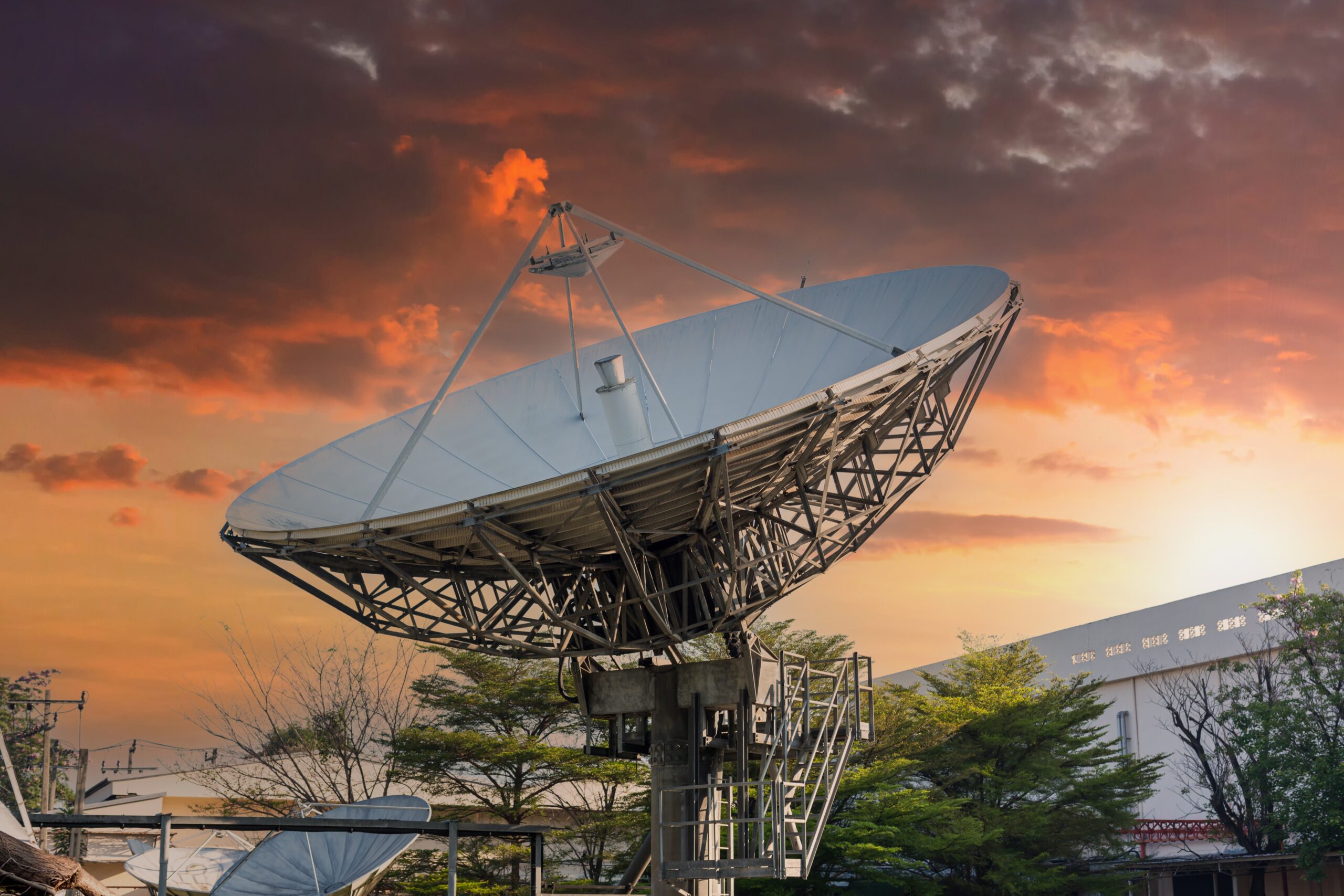

This article explores how satellites have become essential infrastructure for modern global connectivity. It examines how space-based communication systems support internet access, education, healthcare, disaster response, and economic development—especially in underserved regions across Africa. Drawing on real-world examples like ANGOSAT-2 and regional collaborations such as the SADC Shared Satellite System, the article highlights how satellite infrastructure reduces dependency, expands digital inclusion, and strengthens long-term resilience. It also emphasizes the importance of international partnerships, workforce development, and integrated satellite-terrestrial networks in shaping the future of global communications.
Modern communication systems are often taken for granted. Messages are transmitted instantly, data flows without interruption, and networks operate seamlessly across borders. This capability is enabled by a sophisticated infrastructure that extends beyond Earth’s surface. Space science has been instrumental in developing this infrastructure, establishing satellites as essential elements of global communication.
Space-based systems are now at the heart of global connectivity. They make it possible to communicate across continents, oceans, and remote areas where building physical networks is difficult or too expensive. What used to be an extra feature is now a core part of how communication networks work.
What we’ve seen from this shift is that communication is no longer limited to fiber networks or physical towers. Satellites now form a parallel layer of infrastructure that ensures continuous global connectivity, even when ground systems are limited or disrupted.
At a societal level, connectivity brings communities into wider networks of information and opportunity. Africa’s connectivity challenge is not only about access, but also about economics and sovereignty. Many countries continue to rely on leased capacity from foreign satellite operators, resulting in millions of dollars in recurring annual costs and creating long-term dependency.
Reflecting on my experience with satellite systems and telecommunications, I’ve seen time and time again that infrastructure defines access. As the communication infrastructure expands, so do the opportunities. When it’s limited, so is participation and growth.
Satellites as the Backbone of Modern Connectivity
Satellites operate quietly in orbit, yet their impact runs deep. Whether supporting internet access, broadcasting services, or securing communications, satellites form the backbone of global connectivity.
Satellites aren’t limited by borders or obstacles like ground infrastructure is. One satellite can connect people across many countries and continents. We’ve seen this happen across the globe, and it’s especially helpful in places where building traditional networks is too expensive or not possible.
With increasing digitalization, the need for resilient communication systems becomes increasingly clear. Businesses, governments, and individuals depend on uninterrupted information access. Satellites maintain connectivity when terrestrial networks are disrupted by natural disasters, infrastructure deficiencies, or technical failures.
ANGOSAT-2 demonstrates how satellite infrastructure strengthens national communication capacity.
Communication systems aren’t defined only by what’s in orbit, but by the operational systems that support them on the ground. Engineers monitor signal quality, manage bandwidth allocation, and respond to disruptions in real time. These operational layers ensure that global connectivity is sustained reliably over time.
During my career, I have seen connectivity change from being limited by infrastructure to becoming a key part of modern economies. In the past, access was held back by geography and high costs. Now, satellite systems have changed this by reaching beyond physical barriers. This is especially true in Africa, where the move from nanosatellites to larger systems is making a big difference, as I wrote in Space In Africa.
This shift is particularly relevant in Africa, which remains the least connected continent globally. In many regions, connectivity is constrained by geography, infrastructure costs, and limited access to electricity, leaving large populations excluded from digital services.
The biggest change is that connectivity is now seen as essential infrastructure, not just a support service. Satellite systems help close the gap by reaching places traditional networks cannot. This is both a technical and a structural shift.
Extending Connectivity to Underserved and Remote Regions
One of the most visible impacts of space-based communication systems is their ability to extend connectivity to underserved and remote regions. Many parts of the world face significant challenges in building terrestrial infrastructure due to geography, cost, or population distribution.
Mountains, deserts, forests, and dispersed communities make it difficult to deploy traditional networks. In these environments, satellite connectivity often becomes the most practical solution.
People across Africa know this challenge well. Large rural populations and varied landscapes need communication solutions that do not rely on ground networks. Satellites make it possible to connect these areas, where building physical networks would take years.
Each time a satellite connects a rural village, classroom, or clinic, it reinforces the reality that space isn’t distant; it’s operational and human.
Connectivity is visible in classrooms that gain access to digital resources, in clinics that can communicate with specialists, and in communities that can participate in digital economies for the first time.
Satellite connectivity has made a real difference in education and healthcare. Thanks to systems like ANGOSAT-2 and programs like Conecta Angola, remote schools and clinics now have access to digital tools they did not have before.
Conecta Angola is a national platform based on ANGOSAT-2. It lets startups and service providers use satellite capacity to offer services in remote areas.
This connectivity helps students use digital learning tools and lets healthcare workers talk to specialists, share information, and improve their services. In these settings, connectivity drives inclusion, access, and a better quality of life.
Strengthening Essential Services Through Space-Based Communication
The impact of satellite-enabled connectivity is most noticeable in essential services. Communication infrastructure isn’t only about convenience; it’s about access to education, healthcare, and emergency support.
Connectivity removes the limits that geography once placed on access to knowledge.
In healthcare, satellite systems support telemedicine, remote diagnostics, and data sharing between medical facilities. These capabilities extend healthcare services to communities that otherwise lack access to specialized care.
During disaster response, communication is vital. When terrestrial infrastructure is compromised, satellite networks provide the resilience required to maintain coordination, disseminate information, and support recovery efforts. In such situations, connectivity is indispensable.
Projects like ANGOSAT-2, the SADC Shared Satellite System, and work with the International Telecommunication Satellite Organization (ITSO) are turning space infrastructure into a bridge that connects people, knowledge, and opportunities.
These projects show that space-based communication does not work alone. They’re part of larger systems that help drive development and resilience.
Collaboration as a Driver of Space-Based Communication Growth
After so many years of innovation, it’s clear to everyone that no country builds global communication systems on its own. The scale and complexity of satellite infrastructure require collaboration across nations, institutions, and industries.
Regional cooperation plays a key role. The SADC Shared Satellite System is an example of how countries can work together to develop infrastructure that benefits multiple populations. By pooling resources and expertise, countries can expand global connectivity more efficiently than through isolated efforts.
International organizations help coordinate standards, manage spectrum, and ensure interoperability. These frameworks enable different systems to operate seamlessly together, which is essential for maintaining reliable global connectivity.
From my work with groups like ITSO, I have seen how good coordination leads to better results.
Effective partnerships in space infrastructure are built on alignment, trust, and operational clarity. It’s not enough to agree at a high level; partners must align on technical standards, responsibilities, and long-term objectives.
Making sure different networks work together is crucial, especially in communication systems. Partnerships also need to consider real-world conditions, like gaps in infrastructure, energy supply, and local market needs. Business models and service delivery must adapt to these factors.
Trust is built through consistent execution, and over time, that reliability becomes part of the infrastructure itself.
Space Technology as a Catalyst for Economic and Social Development
Expanding connectivity has a direct economic and social impact. When communication infrastructure improves, it creates opportunities for businesses, governments, and individuals to participate in digital economies.
Entrepreneurship benefits from this connectivity. Businesses can access markets, communicate with customers, and operate more efficiently. Digital services become more accessible, allowing new industries to develop.
For governments, better global connectivity means improved services, smarter decisions, and stronger infrastructure. Communication networks help different sectors—like agriculture, transport, and public services—work together more smoothly.
Owning and operating satellite infrastructure changes this dynamic. It allows countries to reduce reliance on external providers, retain value within their own economies, and build capabilities across the full value chain from upstream systems and midstream operations to downstream services.
Connectivity lets people access information, join conversations, and take part in economic growth.
These advancements show how satellite technology acts as a gateway, not just a technical milestone. They strengthen education, expand access to healthcare, and power economies and communities that were once disconnected.
In Africa, it is clear that communication infrastructure and development go hand in hand. Space-based systems are not separate from economic progress—they help build its foundation.
There’s also a strong link between connectivity and workforce development. As the communication infrastructure expands, it creates demand for new skills. Engineers, data analysts, network specialists, and policy experts all play roles in sustaining these systems.
In Angola, this has been evident. As satellite capabilities have grown, so has the need for local expertise to manage and operate these systems. This reinforces a simple point: Global connectivity isn’t just about technology. It’s about building the human capacity required to sustain that technology over time.
The Future of Global Connectivity Through Space
Looking ahead, I strongly believe space will continue to play a larger role in enabling global connectivity. Advances in satellite technology, including higher-capacity systems, improved latency, and more flexible network architectures, are reshaping how communication networks operate.
Space-based and terrestrial systems will become more tightly integrated. Hybrid networks that combine satellite and ground infrastructure will provide more reliable and adaptable global connectivity.
These changes show that we need to keep investing. Building and maintaining communication networks takes long-term effort, both in technology and in people.
As I have often said, space is not just about exploring far-off places. For Angola and Africa, it is about making connections in our own communities. We are closing gaps, giving people a voice, and creating chances for a more connected world.
This perspective shows how our understanding of space technology is changing. It’s seen as infrastructure that supports global connectivity, economic participation, and social inclusion.
The future of communication will depend on how well space-based systems are integrated into our broader digital ecosystems. Countries that invest in these systems, and in the people who design and operate them, will be better positioned long-term.
Looking forward, space will keep playing a bigger role in global connectivity.
New advances in satellite technology—like higher capacity, better speed, and more flexible networks—are changing how communication systems work.
My advice would be to focus on building strong foundational skills while understanding that space systems are inherently interdisciplinary. Satellite communications is not only about hardware. It also involves software, data, networks, and operations.
Engineers should seek opportunities to work on real systems, understand how components integrate, and develop problem-solving skills in operational environments.
Most importantly, remain adaptable. The field is evolving rapidly, and those who combine technical depth with system-level thinking will be best positioned to contribute meaningfully.
Conclusion
Space has changed the way the world connects. Where geography once limited us, satellites now make global communication possible. As global communication systems evolve, the role of space will only grow. The question is not whether space will shape the future of connectivity. It already is. The real question is how we choose to participate in building that future.