How does STEM education serve as the foundation of the global space economy’s long-term growth and operational success? Why must African nations prioritize STEM education to strengthen their position in the global space economy? How can STEM education transform young talent into space-ready professionals capable of leading future missions and governance frameworks?
The global space economy is far more than rockets and satellite launches; it is a complex ecosystem powered by people, systems, standards, and institutions. At the center of this ecosystem lies STEM education. From engineering and satellite operations to data governance and mission planning, STEM education functions as a strategic infrastructure that enables nations to design, operate, regulate, and expand space-based capabilities. Without strong STEM foundations, space programs lack reliability, investability, and long-term sustainability.
For Africa, and particularly Angola, STEM education represents both opportunity and strategy. As the continent positions itself within frameworks like Artemis and expands satellite and Earth observation programs, the true differentiator will not be announcements but competence. By investing in STEM education, African nations build a pipeline of engineers, analysts, policymakers, and innovators who can transform space participation into economic growth, institutional maturity, and global leadership within the space economy.
The global space economy is often described through rockets, missions, and satellite launches. But if you want to understand how the system truly works, you have to look beyond coordinates and launchpads. The global space economy is an ecosystem. It is built on supply chains, standards, data networks, operational teams, research labs, financing models, regulatory systems, and most importantly, people with the skills to design and run complex systems.
However, space science is not separate from economic development. It is one of its driving forces. Space systems are now responsible for shaping telecommunications, disaster responses, logistics, agricultural resilience, climate monitoring, and national planning.
This is why STEM must be understood as strategic infrastructure for the global space economy. It underpins operational capability, governance readiness, and long-term sustainability, just as critically as satellites or launch systems.
The most valuable piece of the space economy isn’t the satellite in orbit; it’s actually STEM education. It trains engineers who keep satellites operating. It keeps labs running where data algorithms are tested. And it equips policy teams with the understanding of spectrum, standards, interoperability, and responsible operations.
I describe the space economy as a STEM-driven system because it is grounded in practical applications. Without STEM, there is no credible pathway to build, operate, secure, regulate, or expand space-based capabilities.
STEM Education as the Engine of Space Innovation
People sometimes ask me why STEM matters so much for space. The simplest answer is that space systems are unforgiving. There’s no room for guesswork in a spacecraft; communications networks cannot be successful with weak engineering, and a mission operations center cannot run on motivation alone.
Growing up in a poverty-stricken environment with limited resources, I discovered early on that STEM could be a tool to break down barriers and transform lives. While many doors were closed to me, education gave me the key to open new ones. I learned STEM skills, including problem-solving under constraints, experimental thinking, and engineering systems.
Another point that matters is this: space innovation begins in a classroom where young people can ask questions and learn models that expand their thinking. That learning becomes the basis for advanced skills like autonomy, robotics, Earth observation analytics, cybersecurity, spacecraft systems engineering, spectrum coordination, and mission operations. STEM education provides the foundation for that kind of early thinking, long before someone learns orbital mechanics or space communications.
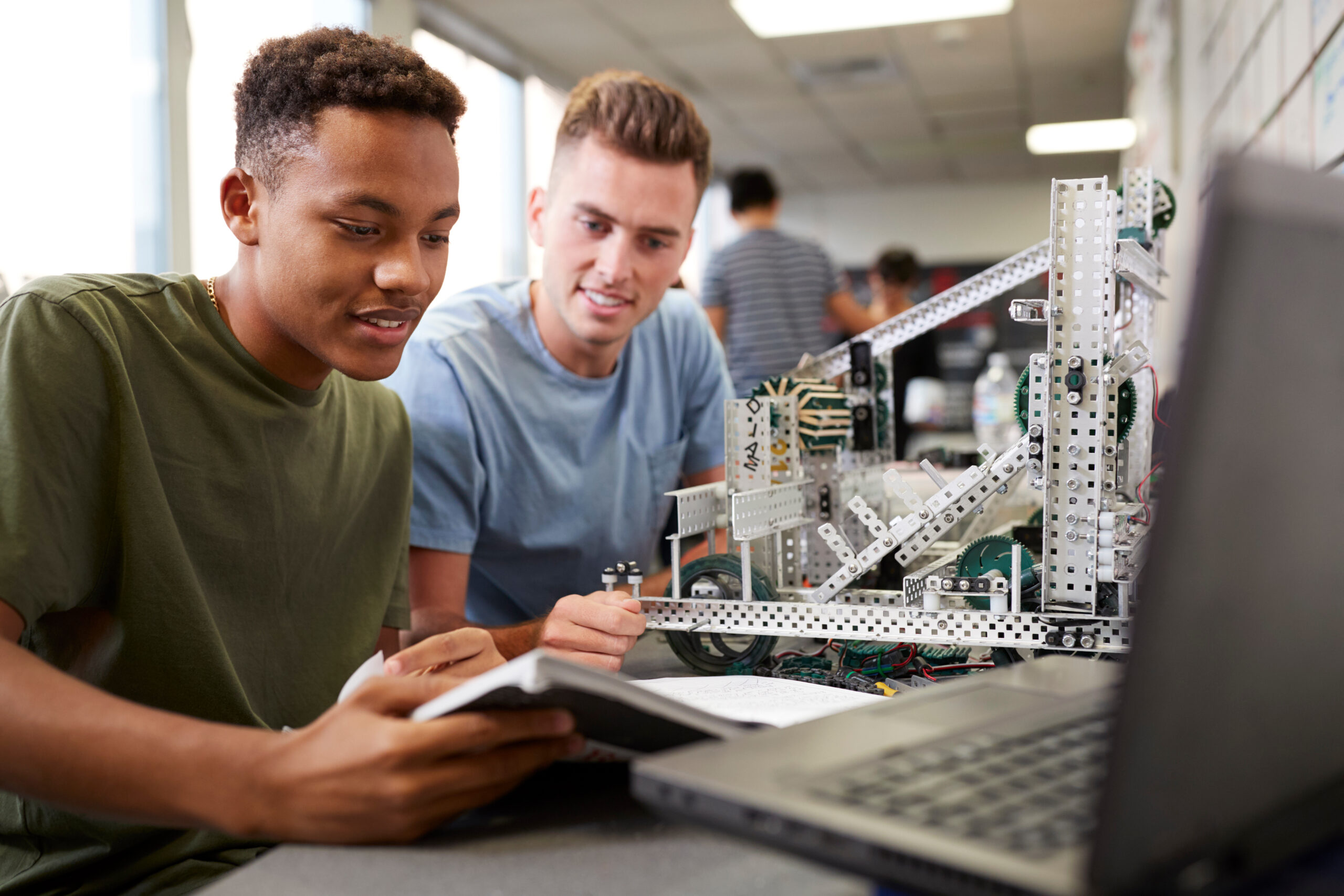
Across Angola’s space-related projects and capacity-building work, there’s a consistent pattern. The strongest teams are not the ones with the loudest ambitions. They are the ones who invest in training, mentorship, and professional discipline. Project-based learning and structured mentorship consistently produce engineers who can move directly into operational roles rather than remaining confined to theory.
Space also depends on a pipeline. It is not enough to train one cohort of engineers. You need a continuous flow of skilled professionals, technicians, analysts, software engineers, systems architects, mission planners, data scientists, researchers, and policy specialists who understand how technical systems translate into national outcomes.
During technical reviews, I’ve sat and observed the differences between good ideas and working systems. It always comes down to what a team can test, validate, and document decisions. This is not glamorous work, but it’s exactly what makes programs reliable. When a program shows its reliability, the space economy becomes more investable.
Africa’s Strategic Position in the Global Space Economy
Africa has a strategic advantage that the world cannot ignore. According to research conducted by The Brookings Institution, the continent has one of the youngest populations globally, and that youth curve is not just a demographic statistic; it is an economic resource. If we build skills and institutions, Africa becomes a talent engine for the global space economy. If we do not, that advantage turns into a lost opportunity.
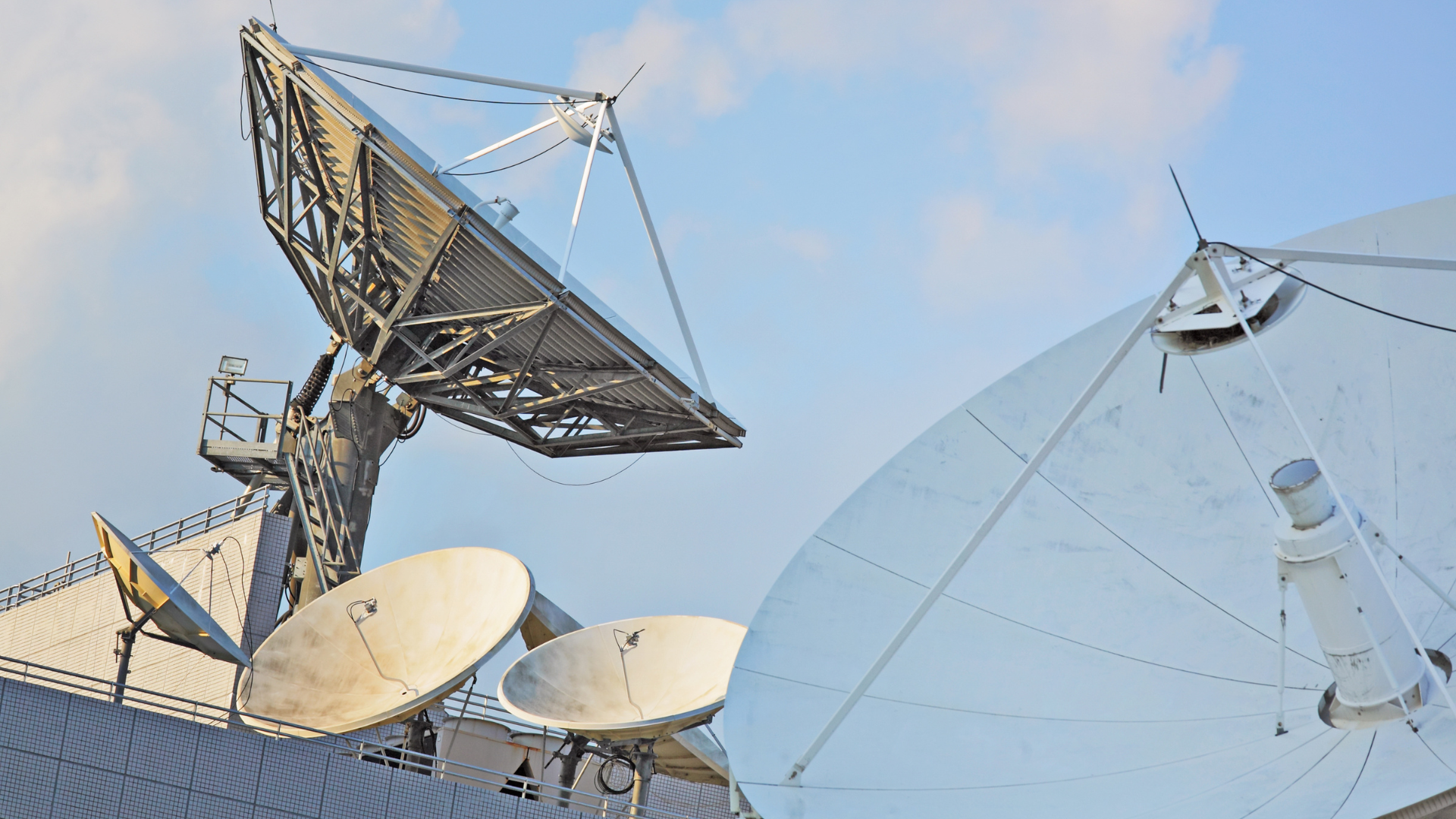
The good news is that Africa’s engagement in space is no longer theoretical. Across the continent, we see growth in satellite programs, Earth observation applications, climate analytics, telecom partnerships, and new space-focused academic programs. The African Space Agency’s operationalization signals a new phase of coordination and representation.
But Africa’s long-term position will not be decided by announcements. It will be decided who can design systems, analyze data, operate satellites, develop applications, and negotiate governance frameworks from an informed position.
That is why I consistently return to one point: STEM education is the foundation for Africa’s competitiveness. We’re building engineers, scientists, and innovators who will determine how Africa fully participates in and shapes the global space economy.
Angola offers a practical case study of this dynamic. Parallel investment in STEM capacity and infrastructure has translated into greater operational maturity, particularly through satellite operations and ground-system capability. Programs like ANGOSAT-2 demonstrate how trained national teams, mission operations, and institutional learning reinforce one another, moving a country from service consumption toward operational ownership.
Relevance alone does not guarantee value; it emerges when African institutions can develop local systems, process data locally, and train local talent. A country’s seat at the table can change quickly when it brings competence. When your engineers speak in terms of operations, data governance, and architecture, partnerships shift. Then the conversation becomes more about access instead of about contribution.
From Classrooms to Orbit: Building Space-Ready Talent
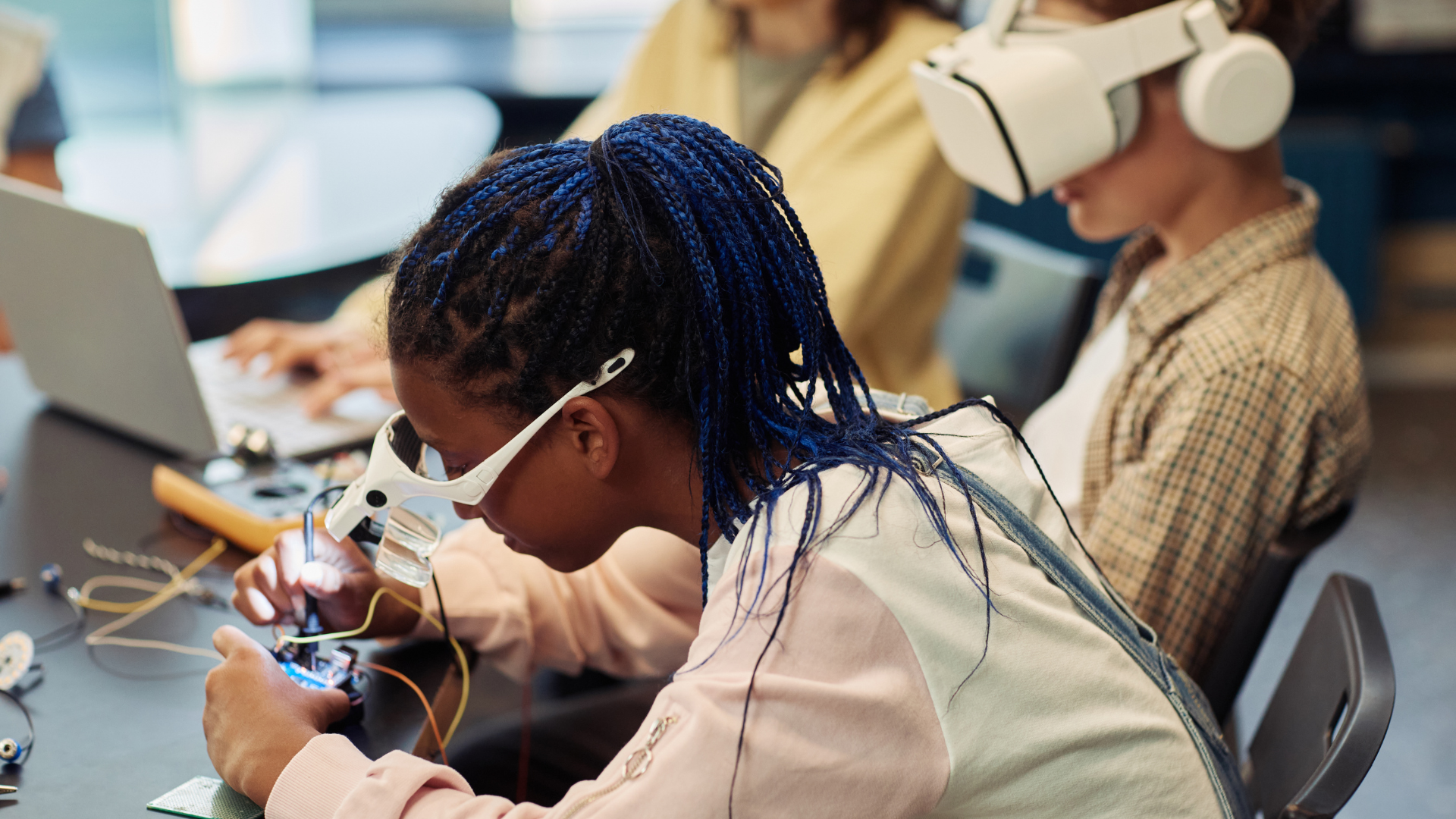
To build space-ready talent, we need to treat STEM learning as more than textbook knowledge. Space work requires people who can build, test, troubleshoot, and operate systems under pressure. That kind of capability comes from learning environments that reward practice and problem-solving.
The most effective pathways for STEM education have a few similarities:
- They teach fundamentals but also require application.
- They expose students to real data and real systems early.
- They build confidence through hands-on work.
- They connect learning to national needs.
When students see the impact of satellite data, they understand why it matters.
I was first drawn to information and communications technology (ICT), electronics, and telecommunications. I became fascinated by how technology could connect people and create opportunities even where resources were scarce. This passion shaped my early career and gave me the foundation to think beyond immediate limitations.
This is also why educators matter so much. A teacher who can translate technical is solely responsible for equipping the generation that will lead us forward. Institutions that support teachers with training and tools build stronger pipelines.
Recognition of young African and Angolan engineers in continental space initiatives is not symbolic. It is evidence that mentorship-driven, project-based STEM development produces globally competitive talent within Africa’s space ecosystem.
If students only learn in theory, they will struggle when they reach mission operations, satellite data processing, or system testing. Space programs need individuals who have already developed small systems, written code, and collaborated in teams.
The future space economy needs professionals who can move across disciplines, engineers who understand policy limitations, data scientists who understand user requirements, policymakers who understand technical standards, and leaders who understand workforce development. When I meet engineers and analysts who are early in their careers, I always look to see if they can translate data into a decision that someone can act on. That ability is what turns STEM training into a national value.
STEM Capacity Building and Global Collaboration Frameworks
International frameworks matter because they shape who can participate easily and who faces barriers. This is where Artemis becomes relevant beyond its missions. Artemis is building an architecture and a set of operating norms for sustained lunar activity. The Artemis Accords signal commitments to transparency, peaceful use, interoperability, and responsible behavior.
For African nations, engagement with Artemis translates into practical benefits when approached strategically:
- Access to collaboration pathways
- Exposure to operating standards and mission architectures
- Stronger positioning in global governance conversations
- Opportunities for workforce integration and technology transfer
- New demand for skills in data, operations, communications, and robotics
Artemis functions as a practical framework through which African institutions can build governance literacy, operational familiarity, and institutional credibility if STEM capacity exists to absorb those opportunities.
Without trained teams, technology transfer fails. But with trained teams, frameworks like Artemis anchor long-term growth and shape agency priorities towards interoperability, mission readiness, and sustainability.
If African agencies invest in workforce readiness, engineers, analysts, and mission operations teams, then frameworks like Artemis can be an anchor for long-term growth. It also allows African institutions to co-invest in shared capabilities, such as data centers, ground infrastructure, training programs, and standards alignment.
Artemis-related engagement can shape agency priorities for years ahead. It encourages agencies to focus on interoperability, data governance, mission readiness, and workforce development rather than on isolated projects, thereby building resilient institutions.
Economic and Developmental Value of STEM-Led Space Participation
Satellites and mission results are visible indicators of progress. But for African economies, the deeper value lies in building skills that expand industrial capability beyond the space sector. When a country trains engineers and scientists, it builds national capacity for advanced industries that spill over into telecommunications engineering, cybersecurity, and data protection.
That spillover is one reason space capability matters so much for national development. A well-trained workforce strengthens multiple sectors at once. STEM education is the mechanism that creates this spillover.
In Angola, one of the clearest lessons I have seen is that satellite systems become more valuable when national teams can process and apply data locally. The country loses value when data that has to be exported for analysis. When local institutions turn data into decisions, the country gains capability and independence. That is what turns space investments into long-term national assets, and why STEM education must be treated like infrastructure.
Shaping the Future of Space Through African Innovation
Africa’s contribution to the global space economy should not be limited to participation. It should include leadership.
The continent brings perspectives shaped by real-world needs like climate variability, infrastructure constraints, food security pressures, connectivity gaps, and rapid urban growth. Challenges that require innovation. And space systems provide tools to address them at scale.
African innovators can develop new approaches in:
- Geospatial AI tailored to local contexts
- Resource mapping and monitoring for resilience
- Satellite-enabled education and health system
Artemis and related frameworks create space for Africa to participate as a contributor, not a passive observer. STEM education is what makes that influence credible.
When African agencies invest in STEM capacity building, they create professionals who can lead negotiations, contribute to missions, build interoperable systems, and shape standards. That is how Africa becomes a co-author of the space economy.
Africa’s future in space will not be determined by a single mission or agreement. It will be decided by whether we build the skills and institutions that last for decades. Space is becoming more operational, more commercial, and more integrated into national development. This is not the time for Africa to watch from the sidelines. It is time to build the skills, standards, readiness, and institutions that allow Africa to participate confidently.
If we want Africa to be a serious space contributor, the direction is clear. We invest in infrastructure, yes. But we invest even more in people. We invest in schools, labs, research environments, and professional pathways that turn curiosity into competence.
Because in the long term, the most valuable space asset is not a satellite. It is a workforce, and STEM education is how we build it. I truly believe that education, STEM, and technology are the pathways to prosperity for Africa, and my own story, from poverty to global space leadership, is proof that with determination, vision, and access to knowledge, the impossible can become possible.
I believe that the younger generation includes the minds that will design Africa’s future in space and redefine what’s possible here on Earth.