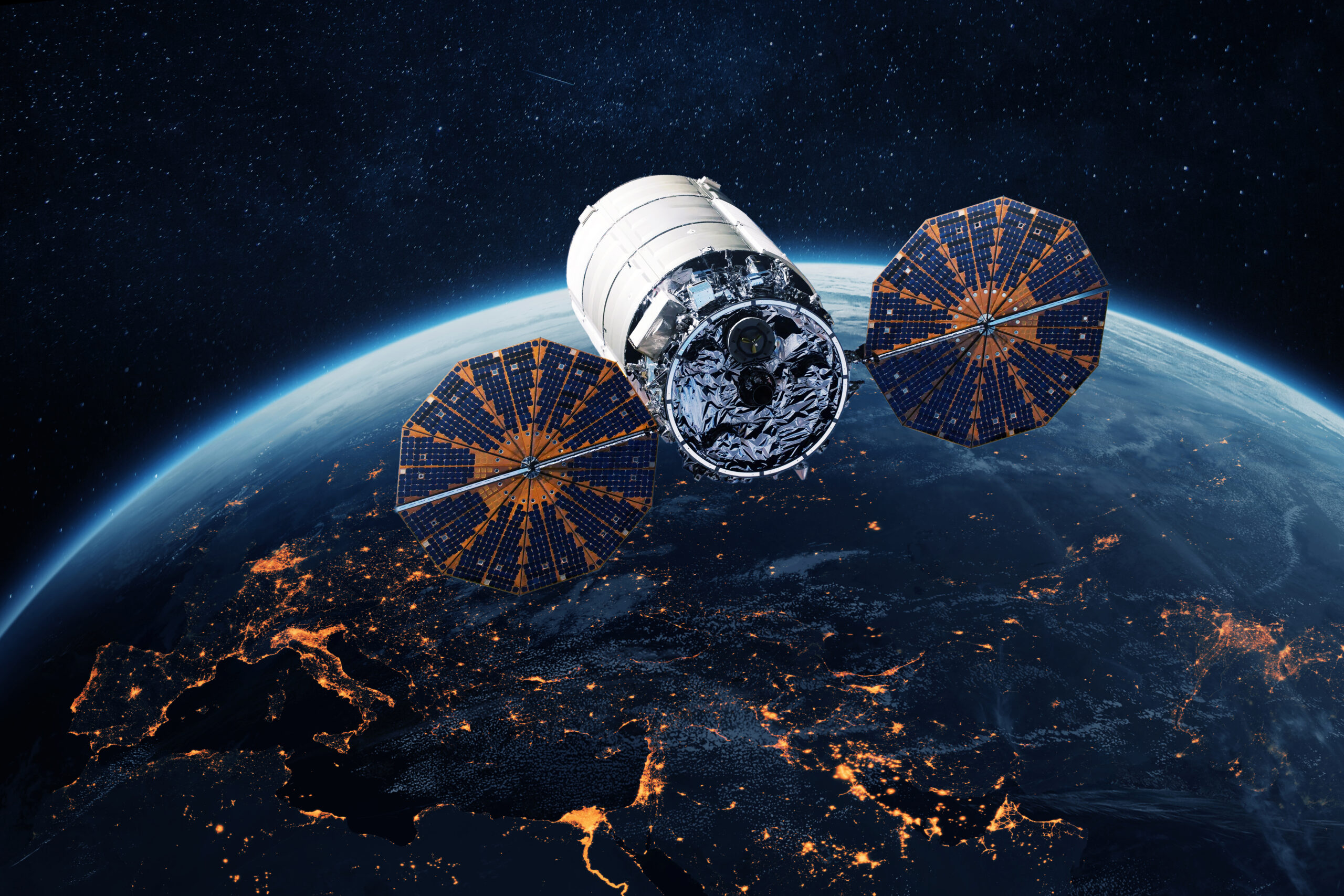

What does it take to build and sustain a successful national space program beyond launching a satellite? Delivering a national space program requires more than technical expertise and successful satellite launches. Drawing on his experience developing Angola’s space program, Dr. Zolana Rui João explains the importance of strategic financing, risk management, operational readiness, institutional capacity, and workforce development. He reflects on the loss of ANGOSAT-1 and the subsequent successful launch of ANGOSAT-2, demonstrating how governments can learn from technical setbacks while maintaining their long-term objectives.
The article identifies three essential stages of space program development: technical achievement, operational capability, and national value. Through practical examples such as ANGOSAT-2, Conecta Angola, and the developing ANGEO-1 Earth observation satellite, João illustrates how space investments can support telecommunications, agriculture, environmental management, and economic development. He also emphasizes the importance of international partnerships that strengthen domestic expertise and reduce long-term dependence on external assistance. Ultimately, the success of a national space program should be measured by its ability to sustain operational capabilities and deliver lasting economic and social value long after a satellite is launched.
The loss of ANGOSAT-1 was one of the most difficult setbacks in the development of Angola’s national space program. After years of engineering, financing, technical preparation, and coordination between institutions, we were faced with a difficult decision: how to move forward while rebuilding confidence in the program.
That experience reinforced an important lesson: launching a satellite is a major achievement, but the challenges of delivering a national space program extend well beyond the launch itself.
Throughout my work developing Angola’s Space Program, I’ve learned that space technology provides the technical foundation for these ambitions. While space science and research are important, a national program also requires the engineering expertise, operational capabilities, and institutions needed to turn that knowledge into practical services.
Through initiatives such as ANGOSAT-2, Conecta Angola, and the development of the ANGEO-1 Earth observation satellite, we’ve experienced different stages of this process. The real measure of a national space program is whether it can build the institutions, capabilities, and services needed to generate lasting economic and social value.
These problems apply to established space nations managing multiple missions and emerging countries developing their first capabilities.
Why Is Delivering a National Space Program More Complex Than Launching a Satellite?
Before a satellite reaches orbit, governments must make decisions about financing, procurement, technical requirements, regulatory responsibilities, and the institutions that will manage the project.
Who will maintain the ground systems? Which organizations will use the available capacity? What financial arrangements will support operations over the satellite’s expected lifetime?
I generally think about the delivery of the national space program in three stages.
The first is a technical achievement: developing, acquiring, and successfully deploying the required infrastructure.
The second is operational capability: establishing the teams, procedures, ground facilities, and institutions needed to operate that infrastructure reliably.
The third is national value: making sure that the capabilities support public services, commercial activity, and measurable national priorities.
Reaching one stage doesn’t guarantee success in the next.
For example, a country may successfully deploy satellite communications systems but still lack the local distribution networks and commercial arrangements needed to serve customers.
National space programs operate on timelines that rarely align with government budgets or political administrations. A satellite project may take years to develop. Its expected operational life can extend well beyond the first investment.
In Angola, the National Space Program Management Office, known as GGPEN, has played an important role in coordinating the Angola Space Program and developing national technical capabilities.
Our work has required us to manage individual projects while maintaining a broader view of what the country needs from its investments. That means connecting satellite communications systems to national priorities such as telecommunications access, economic diversification, education, and institutional development.
“The most important leadership responsibility is protecting the long-term purpose of a program while remaining willing to adjust how that purpose is achieved.”
How Can Governments Balance Financing, Risk, and Execution?
One lesson I’ve learned from the Angola Space Program is that governments must understand the full financial commitment required for a national space program to be successful.
The expense of developing and launching a satellite is high, but it’s not the only expense. Countries must also account for ground infrastructure, technical personnel, software, maintenance, insurance, cybersecurity, regulatory obligations, and eventual modernization or replacement.
A government investing in satellite communications systems should understand what it will take to operate the service and keep it reliable. Procurement arrangements deserve particular attention. Contracts need clear technical requirements, acceptance procedures, supplier responsibilities, and provisions for addressing failures or delays.
The satellite was launched in December 2017 but experienced technical problems and was ultimately declared lost. That was a major setback for our space ambitions.
One of the most difficult decisions after the loss of ANGOSAT-1 was to move forward with a replacement while rebuilding confidence in the program. We had to learn from the setback without losing sight of Angola’s long-term ambitions. After ANGOSAT-1, we learned that buying a satellite doesn’t give you a program. The capability lives on the ground, in the people who can operate, maintain, and defend it. That’s when the balance changed for us. For ANGOSAT-2, this meant closer attention to risk management, technical oversight and operational readiness, as well as the development of Angolan expertise.
ANGOSAT-2 was successfully launched in October 2022.
“I wouldn’t suggest that every technical failure can be anticipated or prevented. Space missions involve risks that can’t be eliminated entirely.”
But governments can prepare for how those risks will be managed through insurance arrangements, contractual protections, contingency planning, independent technical reviews, and clear decision-making duties.
Following its October 2022 launch, the satellite underwent orbital maneuvers and technical testing before entering its operational phase.
Angolan specialists worked with international technical teams during this process, including activities associated with the satellite’s positioning and operational readiness. These steps required coordination between the satellite manufacturer, mission control personnel, technical authorities, and the institutions responsible for operating the system. But operational preparedness also requires planning for customers.
Why Are Institutional Capacity and International Partnerships Essential to Long-Term Success?
No national space program should depend indefinitely on a small group of individuals.
People change positions, technical teams evolve, and international contractors eventually complete their assignments. The knowledge required to operate a national program must remain within the institutions responsible for it.
This is why workforce development needs to be treated as an operational requirement rather than a separate educational activity.
A defining moment came while we were preparing Angolan specialists to work with our international partners on satellite operations. It became clear to me that a satellite alone couldn’t sustain the program. We also needed engineers, operators, and institutions capable of managing the systems and preserving that knowledge in Angola. Building that capacity was therefore as important as the launch itself.
International partnerships have also been important in that process. The value of a partnership should be evaluated in part by what a country can do after the partnership is established.
Training programs should provide opportunities to work with operational systems outside of the classroom. Apprenticeships, technical certification, supervised mission activities, and research projects can help professionals develop experience that’s difficult to get elsewhere.
ANGOSAT-2 provides satellite communications capacity, but connecting that capacity to customers requires additional infrastructure and service delivery arrangements.
Conecta Angola is an example of efforts to expand connectivity for communities and institutions with limited access to reliable telecommunications services. The program demonstrates why satellite communications systems must be considered alongside local networks, equipment, electricity, technical support, and affordability.
ANGEO-1, Angola’s developing Earth observation satellite project, is intended to strengthen the country’s capacity to acquire and use satellite imagery to support national priorities.
Possible applications include agriculture, drought monitoring, territorial planning, and environmental management.
Imagery is just one aspect, though. Agricultural institutions need systems to evaluate crop conditions. Environmental agencies need procedures for monitoring changes. Public authorities need reliable records and the ability to compare satellite observations with information collected on the ground.
There should also be measures of domestic technical participation. How many local professionals are operating systems? How many businesses are providing services? What capabilities can national institutions manage without continuous external assistance?
Every country approaches space development from a different starting point.
Some have established aerospace industries and decades of operational experience. Others are building their first national institutions or entering the sector through commercial applications and international partnerships.
“The strongest national space programs aren’t necessarily those pursuing the most missions. They’re the ones sustaining their capabilities, managing complex responsibilities, and demonstrating the impact of their investments.
Launching a satellite demonstrates technical achievement. But for me, the real achievement is building a national capability that continues creating value long after the launch is over.
Frequently Asked Questions (FAQs)
1. What are the biggest challenges in developing a national space program?
From my experience, some of the biggest challenges involve securing long-term financing, managing technical risks, developing qualified professionals, and maintaining government commitment. A national space program requires coordination between institutions with different responsibilities. Countries need clear governance structures, realistic implementation plans, and the ability to respond when circumstances change.
2. How can emerging space nations reduce the financial risks of satellite projects?
I would encourage governments to consider the full lifecycle of a satellite project rather than focusing only on development and launch costs. That includes ground infrastructure, maintenance, insurance, technical personnel, and future upgrades. Our experience with ANGOSAT-1 and ANGOSAT-2 reinforced the importance of contingency planning, contractual protections, and maintaining program continuity in the event of technical problems.
3. Why is workforce development important to the success of a national space program?
A country needs qualified professionals who can operate, maintain, and manage its space infrastructure. Through Angola’s space initiatives, we’ve worked to develop national technical expertise alongside our satellite projects. I believe training should include practical experience, participation in mission operations, and exposure to international technical standards. The objective is to build institutions that can manage increasingly complex responsibilities over time.
4. How can governments measure whether their national space programs are successful?
I wouldn’t measure success only by the number of satellites launched. Governments should examine whether their investments are improving services, developing domestic expertise, and creating economic opportunities. For satellite communications programs, I would look at service reliability, the number of communities and institutions connected, and the participation of local telecommunications providers. These indicators help determine whether the infrastructure is delivering value.
5. What lessons can other countries learn from Angola’s experience developing its national space program?
One of the most important lessons from our experience is the need to maintain long-term commitment while remaining prepared for technical and financial challenges. ANGOSAT-1 demonstrated how setbacks can affect a national program, while ANGOSAT-2 required continued coordination and execution. Initiatives such as Conecta Angola also show why countries must prepare the services and institutions that will use satellite capacity. I believe these lessons apply to both emerging and established space nations.